ML in Production · 3 min read
Predictive Maintenance Market to Nearly Sextuple by 2033
Grand View Research sizes predictive maintenance at USD 14.2B in 2025, heading to USD 98.1B by 2033. Cisco and Johnson Controls surveys show majority adoption intent.
Key takeaways
- Grand View Research values the predictive maintenance market at USD 14.2B in 2025, USD 17.5B in 2026 and USD 98.1B by 2033 (~27.9% CAGR).
- Cisco's 2026 research: 55% of predictive maintenance projects are mature, 37% early-stage.
- Johnson Controls 2026 report: 72% of manufacturing leaders plan AI for operations and maintenance; 55% of facility managers prioritize AI-driven maintenance spending.
- Siemens' Industrial AI Suite on Industrial Edge went generally available in April 2026.
- Schneider Electric and Microsoft reported up to 50% time savings on some engineering setup tasks via EcoStruxure Automation Expert plus Azure AI.
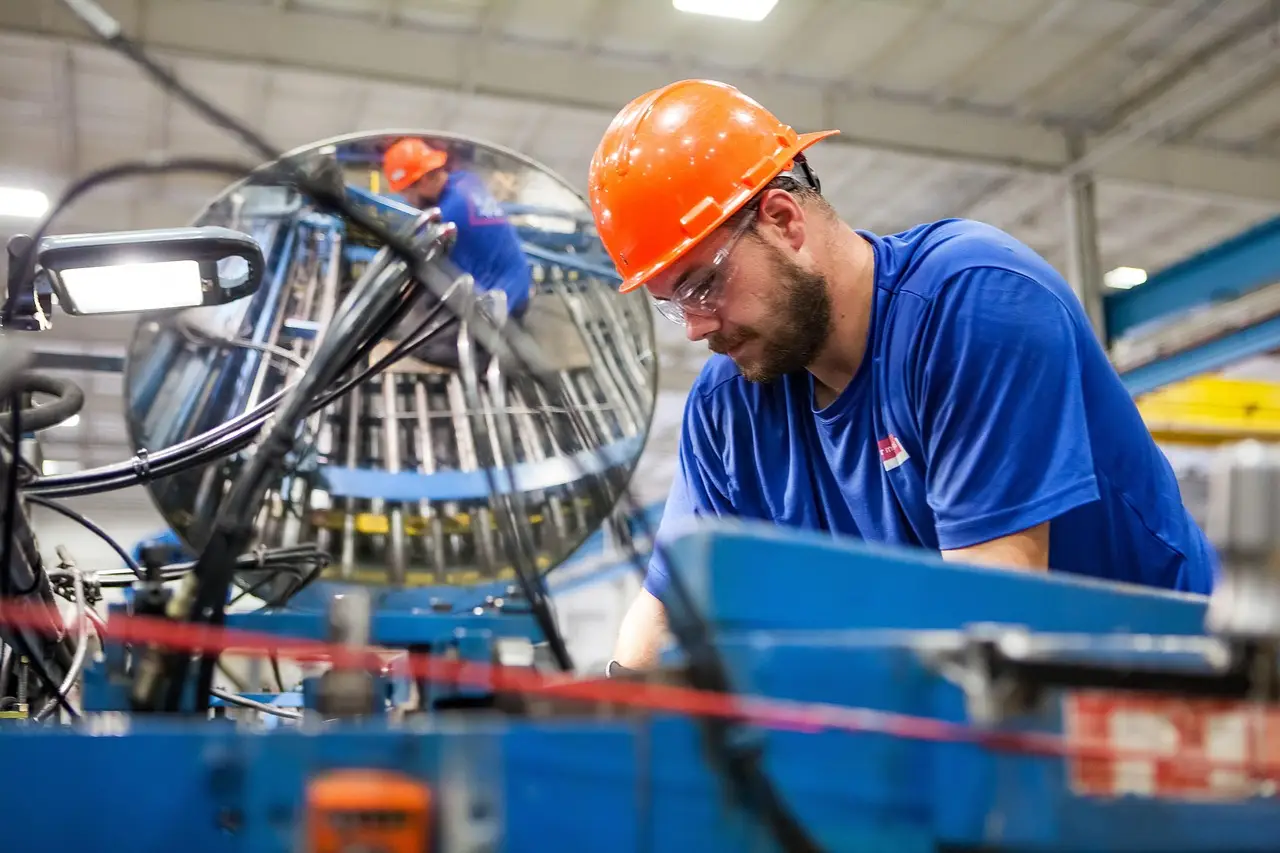
The global predictive maintenance market stood at USD 14.2 billion in 2025 and is forecast to reach USD 98.1 billion by 2033, according to Grand View Research. That trajectory implies roughly 27.9 percent annual growth from 2026, when the market is expected to hit USD 17.5 billion. The numbers frame a sector moving from pilot projects to plant-floor standard practice.
The underlying claim is simple: AI models reading sensor data detect fault signatures before breakdowns. A motor typically vibrates abnormally before a bearing fails. The system flags it, technicians swap the part, and the line keeps running instead of stopping for hours.
What do the adoption surveys actually show?
Two vendor surveys point the same direction, though they measure different things and do not sum to a single adoption rate.
- Cisco's 2026 State of Industrial AI research found 55 percent of predictive maintenance projects have reached a mature stage; another 37 percent remain early-stage.
- Johnson Controls' 2026 AI and Digitalization Report says 72 percent of manufacturing leaders plan to use AI for workplace operations, asset use and maintenance.
- The same Johnson Controls report puts AI-driven predictive maintenance as a spending priority for 55 percent of facility managers planning technology budgets.
The caveats matter. A mature project label is self-reported, and vendor research carries an understandable interest in adoption narratives.
Which vendors moved in 2026?
Siemens made its Industrial AI Suite on Industrial Edge generally available in April 2026. The product covers setup and management of industrial AI applications, including predictive maintenance and visual inspection.
In the same month, Schneider Electric and Microsoft announced a partnership combining Schneider's EcoStruxure Automation Expert with Microsoft Azure AI. The companies reported saving up to 50 percent of the time on some engineering setup and paperwork tasks. That figure covers administrative work, not fault detection itself, and the distinction is worth holding onto.
Cisco's research adds a prerequisite: factories need strong networks, better cybersecurity, and closer cooperation between IT teams and floor operations before any of this works.
Where does the money come back?
The mechanism is downtime avoidance. A single failure on an automotive line, where robots, conveyors and welding machines run in sequence, can slow or halt several downstream steps. Pharma plants depend on compressors, air systems, cooling units and clean rooms; food plants on refrigeration, pumps, bottling and packing lines. In both, a failure threatens product quality, safety and delivery dates, not just output volume.
The measurable benefits land in specific metrics:
- Lower repair costs and fewer rush orders for spare parts
- Higher overall equipment effectiveness (OEE, the share of full capacity a line actually uses)
- Longer intervals between failures and fewer unplanned stoppage hours
- Parts replaced on condition rather than calendar, easing inventory management
The skeptical test is alert quality. A large number of alerts proves nothing. Alerts must point to real faults and arrive early enough for a team to act.
What should a data team do first?
The prerequisites are unglamorous. Older machines may lack sensors or digital connections, so data collection is the first cost. Poor records, missing readings and false alarms degrade prediction quality. Connected equipment widens the attack surface, which brings cybersecurity into scope, and staff need training to interpret alerts correctly.
For smaller manufacturers, sensor, software, network and training costs add up. The pragmatic path in the source is a pilot on a few critical machines — motors, pumps, compressors — validated on one production line before plant-wide rollout.
Looking forward, digital twins let engineers model machine behavior in a virtual copy. Generative AI tools help technicians search service records and repair guides. AI agents may eventually draft work orders and suggest repair plans, though the source is explicit that humans should keep the important decisions.
Breakdowns will not disappear. An early warning buys reaction time, and that time is what protects output, cost and equipment life.
openblue.johnsoncontrols.com (Original)
More from Marcus Bennett
Show full bio
News editor covering people, launches and day-to-day practice in Analytics Digest is a professional daily at Analytics Digest.
13 articles