ML in Production · 3 min read
Google Books Blue Origin to Launch AI Satellites in 2029
Google will launch TPU-powered AI satellites on Blue Origin's New Glenn in Q1 2029. Each orbiter matches one data centre rack; heat, radiation and cost questions remain open.
Key takeaways
- Google announced on November 19 that Blue Origin's New Glenn will launch its AI satellites in Q1 2029.
- Each satellite carries TPUs with compute roughly equal to one server rack in a conventional data centre.
- Google and Planet Labs flew the first Suncatcher prototype on a SpaceX rocket in October.
- The satellites will orbit where they receive near-continuous sunlight for solar power.
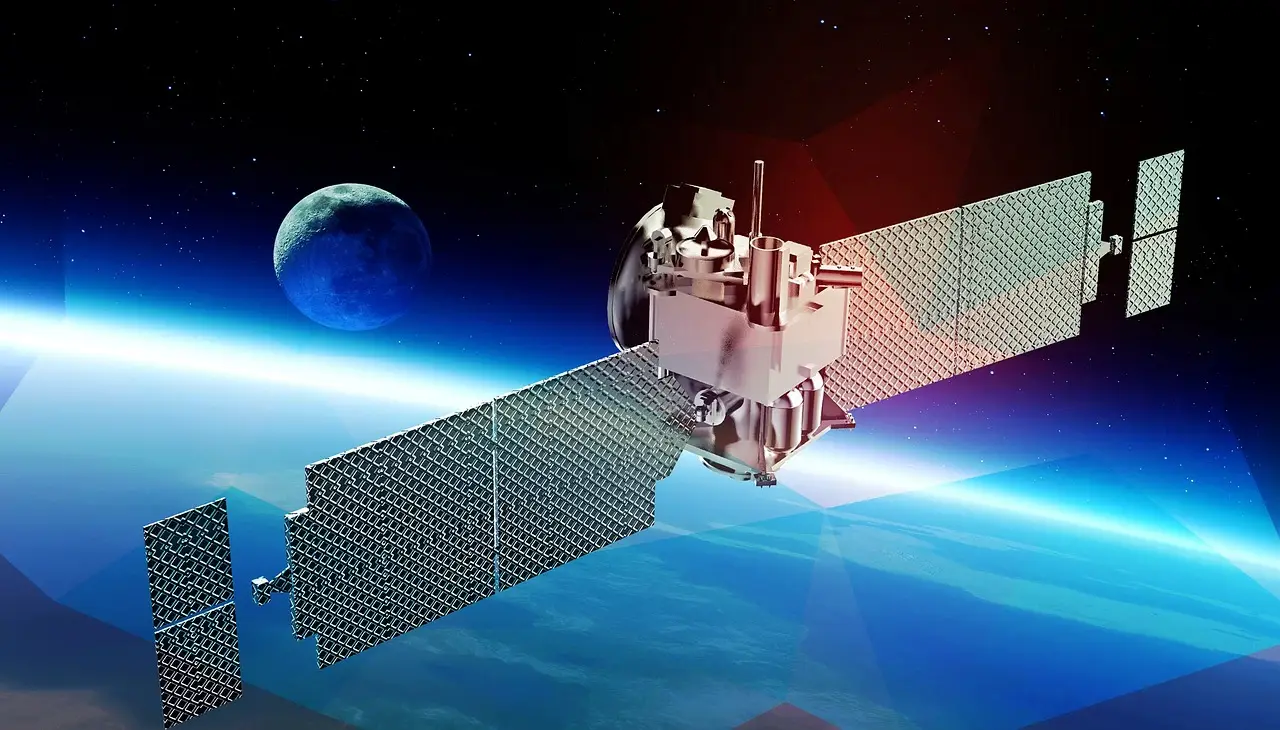
Google has committed to a 2029 launch window for its first operational batch of AI-computing satellites, and Blue Origin's New Glenn rocket will carry them. The announcement, made on November 19, names the first quarter of 2029 as the target and hands Jeff Bezos's launch company a marquee mission in its commercial push.
The satellites belong to Project Suncatcher, Google's research program on running AI workloads on solar-powered platforms in orbit. Each spacecraft will carry Tensor Processing Units (TPUs), Google's in-house accelerator chips for AI inference and training. Google states that one satellite will deliver compute roughly equal to a single server rack in a conventional data centre — a useful unit of measure, because a modern hyperscale facility holds thousands of such racks.
The satellites will fly in an orbit with near-continuous sunlight. That is the entire premise. Solar power arrives in space without night cycles, weather or atmospheric attenuation, and the electricity never competes with a terrestrial grid that data centre operators are already straining.
What has Google already flown?
This is the second Suncatcher mission, not the first. In October, Google partnered with satellite manufacturer Planet Labs and launched an initial prototype aboard a SpaceX rocket. That earlier flight tests how TPUs behave under space conditions: radiation, extreme thermal cycling and the physical stress of launch itself. The 2029 batch on New Glenn is the next phase, moving from component validation to a group of satellites with dedicated heavy-lift capacity.
The choice of Blue Origin also carries commercial weight. The company is expanding its launch business, and the agreement secures it a visible future mission. The suborbital-adjacent rivalry with SpaceX now extends to whose rocket carries whose compute.
Can orbital data centres actually work?
Google itself frames Suncatcher as an experiment, not a product. Four engineering problems stand between the concept and a commercial service:
- Heat management. Space offers no convection; a rack of chips in vacuum must radiate its heat away, and AI accelerators run hot.
- Radiation protection. TPUs were not designed for the orbital radiation environment, and shielding adds mass.
- Launch cost. Mass to orbit remains expensive, even as per-kilogram prices fall.
- Production scale. Building satellites by the dozen differs from building servers by the thousand.
The 2029 mission is best read as a measurement exercise rather than a deployment. Google says it wants to determine whether space-based computing can become a practical option as AI infrastructure demand grows.
What should data teams take from this?
Nothing changes for capacity planners this cycle. Orbital compute will not relieve a single GPU shortage before 2030 at the earliest, and Suncatcher explicitly remains a research initiative. The relevant signal is directional: Google, one of the largest AI infrastructure buyers, is spending real money on the hypothesis that terrestrial power and cooling will become binding constraints, and that sunlight in orbit is the cheaper long-run answer to the electricity bill of AI.
If the prototype data holds — if TPUs survive radiation and thermal stress and radiate heat at acceptable cost — expect the conversation to shift from feasibility to economics around 2030. Until then, treat orbital data centres as a benchmark to watch, not a line item in anyone's forecast.
One satellite equals one rack. Google has not said how many satellites New Glenn will carry, and that missing number will do more than any press release to set expectations for the project's real scale.
Analytics Insight (Source)
More from Rebecca Stone
Show full bio
Senior reporter covering regulation, policy and their impact on Analytics Digest is a professional daily at Analytics Digest.
12 articles